
By James Fitzlang, Director
Victoria goes to the polls on Saturday 28 November, and for the first time in a long while, nobody can say with confidence who will form government.
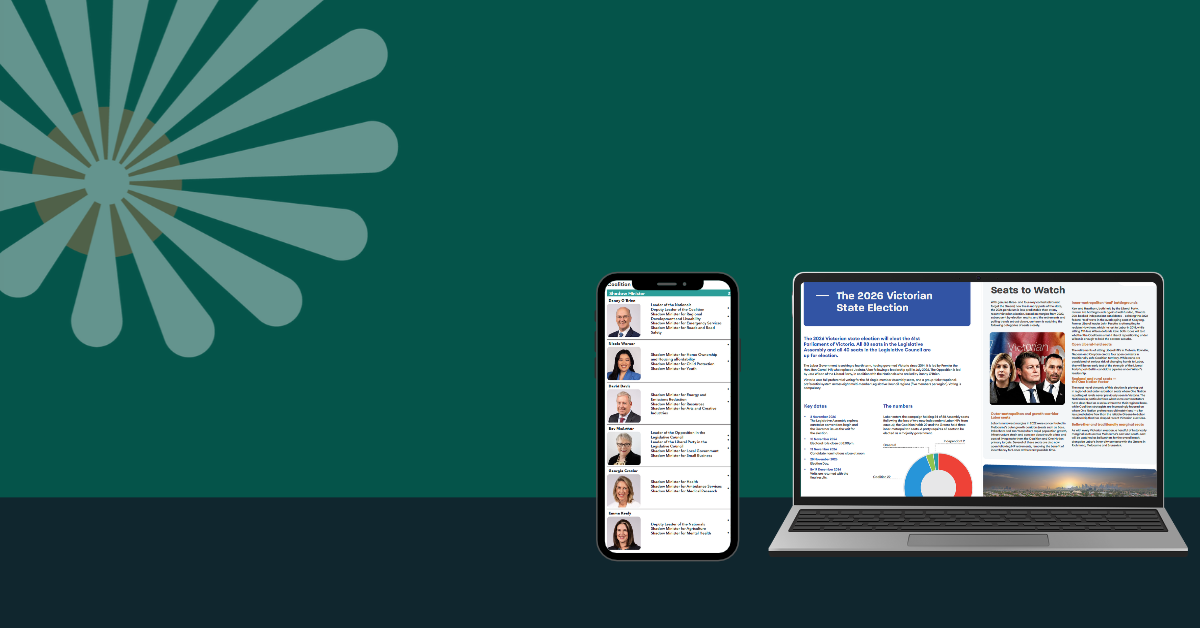
Twelve years of Labor, a mid-term change of Premier, a disciplined Opposition under Jess Wilson and the rise of One Nation as a genuine third force have turned a predictable contest into the most open Victorian election in a generation. For businesses, that uncertainty is a planning problem. So today Banksia Strategic Partners, in partnership with SAS Group, is releasing our 2026 Victorian State Election Guide: a clear-eyed briefing on what each outcome could mean for your organisation.
What’s inside
The guide draws on close to a decade of work at the intersection of policy, politics and public affairs in Victoria. It covers:
- The contenders and power brokers: profiles of Ben Carroll, Jess Wilson and Warren Pickering, plus the ministers and shadow ministers who will matter most to business after polling day.
- The policy battlelines: a side-by-side comparison of Labor and Coalition positions on cost of living, crime, housing, health, First Nations and infrastructure.
- What the polls are saying: the consistent trends across recent polling, and why a Coalition lead on two-party-preferred does not guarantee a majority.
- One Nation’s likely impact: how preference flows and a possible balance of power in the Upper House could reshape the legislative agenda.
- Seats to watch: the growth corridors, teal battlegrounds, open seats and regional contests that will decide the result, with an electoral pendulum of Labor’s most marginal seats.
- The first 100 days: what a re-elected Carroll Government or a new Wilson Government is likely to prioritise from day one.
Why it matters now
Whoever wins on 28 November, the next government’s agenda is already being written. Campaign commitments, transition planning and incoming government briefs are underway, and the early decisions of a new term often set the tone for years.
The organisations that come out ahead are the ones that identify their priorities early and engage before and immediately after polling day. Waiting for the result means reacting to an agenda instead of helping shape it. Our guide is designed to help you plan for every outcome, not just the one the polls currently favour.