
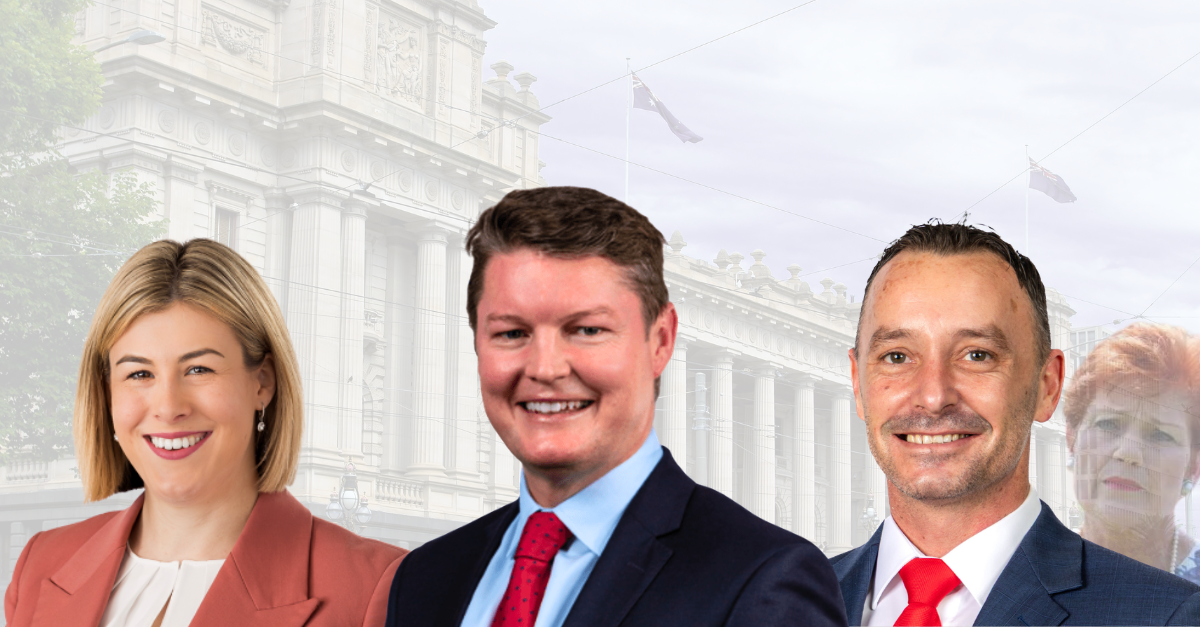
Premier Ben Carroll has sworn in his first Cabinet, confirming a substantial reshuffle of the Victorian frontbench only four months out from the November election. This follows a tumultuous leadership change last week, albeit relatively disciplined by Labor party standards.
The Carroll era begins
Premier Carroll has trimmed his frontbench from 22 ministers to 20. Rising star Tim Richardson is the only new face while the changes come alongside the resignations of Harriet Shing and Lily D’Ambrosio, both of whom have also confirmed they will not recontest their seats in November. A smaller Ministry gives Carroll a useful cost of living narrative despite limited push back from his socialist left faction who would have been beneficiaries of additional Cabinet posts.
As it stands, the Ministry currently consists of:
Premier, the Hon. Ben Carroll – Premier, having given up Education, Medical Research, WorkSafe and the TAC.
Deputy Premier, the Hon. Gabrielle Williams – Deputy Premier and Minister for Education, Skills and Training, First Peoples, and Women and Gender Equality. Opting for Education, over her former infrastructure and transport responsibilities, is a good choice for a strong media performer and leadership aspirant. Settling the teachers dispute ahead of strike action will be an early test.
The Hon. Colin Brooks – Former sparky now Treasurer and Minister for Industrial Relations, retaining Industry Brooks will speak authentically about the need for government to get the budget back on track.
The Hon. Jaclyn Symes – Minister for Energy and Resources, Climate Action, Environment and the State Electricity Commission, remaining Leader of the Government in the upper house but no longer Treasurer, Symes will play an important role in managing sensitive issues in the lead up to the election including gas, environmental approvals and resources projects.
The Hon. Anthony Carbines – Minister for the newly created Artificial Intelligence and Digital Economy portfolio, Major Events, Medical Research and Economic Development, retaining Racing and Leader of the House.
The Hon. Paul Edbrooke – Minister for Police, Emergency Services, Crime Prevention and Multicultural Affairs. Taking over from Anthony Carbines’ previous portfolio while moving on from the abolished Men and Boys role, these new portfolios represent a so far meteoric rise for Edbrooke.
The Hon. Sonya Kilkenny – Attorney-General and Minister for Planning, adding Prevention of Family Violence. Losing Finance and Violence Reduction. Note that despite her nomination for the leadership last week as a negotiation tactic, Kilkenny is a safe set of hands and team player.
The Hon. Enver Erdogan – significant promotion to Minister for Finance and Government Services, retaining Casino, Gaming and Liquor Regulation.
The Hon. Ingrid Stitt – Minister for Health, Mental Health and Ambulance Services, retaining Special Minister of State. If Labor can’t win on health, it doesn’t win.
The Hon. Melissa Horne – Minister for Jobs, Industry and Advanced Manufacturing and Defence Industry, retaining Ports and Freight.
The Hon. Steve Dimopoulos – Minister for WorkSafe and the TAC and Equality, retaining Sport but missing out on the highly sought after portfolio of Major Events.
The Hon. Nick Staikos – Minister for Housing, Building and Precincts, adding Homelessness and Seniors, and losing the abolished Suburban Rail Loop portfolio with further announcements on that hot button policy and political issue to follow.
The Hon. Michaela Settle – Minister for Water and Rural and Regional Development, retaining Agriculture. Watch this space for possible changes to the emergency services levy.
The Hon. Ros Spence – Minister for Youth Justice, Corrections and Victim Support, retaining Community Sport.
The Hon. Natalie Suleyman – Minister for Trade, Tourism and Investment, retaining Small and Family Business and Veterans.
The Hon. Vicki Ward – Minister for Public Transport, retaining Creative Industries.
The Hon. Paul Hamer – Minister for Roads and Road Safety, having given up the portfolios he took on in April.
The Hon. Tim Richardson – Minister for Local Government, Consumer Affairs and Renters.
The Hon. Lizzie Blandthorn – Unchanged as Minister for Children and Disability and Deputy Leader of the Government in the upper house.
Staff and public service – behind all of these changes is a changing of the guard of Ministerial staff as well as some machinery of government changes.
Reading beneath the headlines
The Premier is deliberately marking a break from the government he served under for more than a decade. He has framed his leadership as a new chapter for Victoria, and the portfolio choices back that up: the removal of Ms Allan’s signature Men and Boys role, the abolition of the standalone Transport Infrastructure portfolio, the sidelining of the SRL as a standalone priority, and the promotion of Ministers who backed his rise (and avoiding large scale blood-letting with those who did not) all point to a government keen to be seen as leaner, more disciplined and less tied to the big-spending, big-infrastructure identity of the Andrews and Allan years. As the first Leader from Labor’s right faction since 2010 when John Brumby left office, the Premier also has a genuine opportunity, and a political incentive, to differentiate his government from its predecessors heading into November.
The political context
With Labor’s new government under intense political scrutiny, every move from here needs to be carefully calculated. Voters and commentators alike are watching closely for genuine reform rather than a simple rebadge, and the new ministry, alongside the announced Royal Commission into the construction sector, is the first real test of that. In short, Labor needs the substance to match its messages.
The Coalition under Jess Wilson remains well placed and will keep hammering debt, cost of living and service delivery. However One Nation continues to shape up as a real threat in its own right. Naming a full state leadership team and candidate slate this early, headlined by Warren Pickering in the marginal seat of Pakenham, shows serious organisational intent and follows a strong result for the party in South Australia’s recent election. A well-oiled announcement and so far careful candidate selection landing the same week as Labor’s leadership implosion lets the party paint itself as the disciplined alternative while the majors are busy dealing with their own mess. That being said, policy substance, let alone new ideas, is still missing and with a detailed platform still weeks away suggests One Nation wants to set the terms of scrutiny rather than answer to it. This leaves businesses to weigh its organisational momentum against a largely undefined policy offering and reinforces the need to be building with all three major political parties as Victoria heads towards its most fragmented and unpredictable election in almost a decade.
Key issues and policy signals
- Artificial intelligence and the digital economy
Victoria’s first dedicated AI and Digital Economy portfolio, held by Mr Carbines, will oversee regulatory guard rails and data centre approvals, the most consequential structural change for tech, data and manufacturing businesses. Watch for potential internal Caucus issues as government approves data centres lacking social license in the West. - Cost of living and infrastructure delivery
For business, the abolition of a dedicated infrastructure and cost of living portfolios cuts both ways. Scrapping these standalone roles means no single Minister owns the outcome or carries sole exposure and advocacy has to reach several portfolios at once rather than one office. Organisations should not assume either issue has lost priority just because the title is gone as the Premier frames cost of living as every Minister’s job which is itself a useful shield if progress stalls before the election. - Suburban Rail Loop
The Premier insists the portfolio’s abolition doesn’t signal the project’s end, while continuing to leave the door open to a review of its funding and scope. It also opens space for the Premier to push a Melbourne Airport Rail link as the more deliverable, less politically loaded transport priority without formally shelving the SRL before the election. Businesses along the corridor should watch for early signals from Treasury on the timing and terms of any review. - Economic management
Colin Brooks’ appointment as Treasurer, and his stated focus on business relations, signals budget repair will anchor Labor’s pitch to November.
Next steps for your business
For businesses, the reshuffle signals a period of adjustment with affected sectors going well beyond the headline portfolios. Organisations across nearly all industries will need to move quickly, sending congratulations to and engaging with relevant new Ministers, monitoring for significant policy shifts and ensuring new political stakeholders are well briefed on the issues you plan to advocate on. Strong and professional three way engagement with Labor, the Coalition and One Nation is crucial for navigating the changing landscape ahead of November.
If you have any questions about the new Ministry, staffing or machinery of government changes or for assistance in actioning any of the above, please get in touch with our team.