
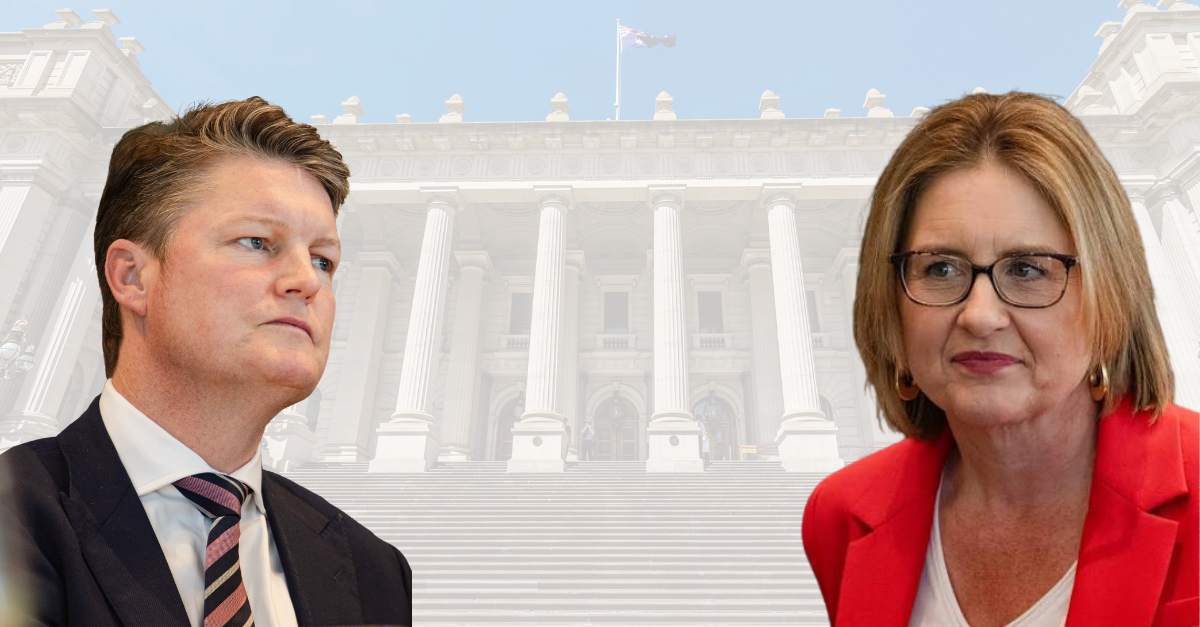
In one of the most significant political developments in Victoria since Daniel Andrews’ resignation in 2023, Premier Jacinta Allan has stepped down as Premier and Leader of the Victorian Labor Party, clearing the way for Deputy Premier Ben Carroll to become Victoria’s next Premier just four months before the state election.
What began as a leadership challenge on Monday quickly evolved into a full-scale transition of power after it became clear Ms Allan no longer commanded majority support within the Parliamentary Labor Party and trade union movement. Rather than trigger a prolonged and potentially damaging ballot involving MPs and rank-and-file members, Ms Allan chose to resign, allowing Labor to avoid a weeks-long internal contest at a critical point in the electoral cycle.
What changed?
Pressure on the Premier had been building for months. Polling consistently pointed to a deteriorating electoral position, while concerns within caucus about the Government’s handling of cost-of-living pressures, state debt, major infrastructure projects and allegations of organised crime within parts of the construction sector continued to mount.
At the ALP’s National Conference in Adelaide, and over the weekend, senior figures from across Labor’s factional divide tested support for the Premier and concluded a change was required. On Monday morning, a cross-factional group of ministers and MPs informed Ms Allan that she no longer enjoyed majority caucus support and urged her to resign. When she declined, Ben Carroll confirmed he would nominate for the leadership, setting the stage for a potentially bruising contest.
Following an all-night meeting last night of the Premier with key Parliamentary confidantes, staff and supporters she less than 24 hours later announced her resignation, arguing that Victoria Labor could not afford weeks of internal division so close to an election.
Where things stand
The immediate leadership uncertainty has now been resolved. Ben Carroll has been elected Leader of the Victorian Parliamentary Labor Party and will become Victoria’s next Premier. Gabrielle Williams has emerged as Deputy Premier and will be a central figure in the Government’s electoral reset heading into November.
However, the caucus process was more turbulent than many anticipated. While a Carroll succession was widely expected, the party room briefly evolved beyond a straightforward handover.
Attorney-General Sonya Kilkenny was nominated for the leadership in an attempt by supporters of Jacinta Allan and sections of the Labor Left to preserve influence over the deputy leadership and broader leadership structure. The strategy ultimately failed, with Carroll prevailing and Williams securing the deputy leadership.
Nevertheless, the episode demonstrated that important factional negotiations remained underway right up until the final vote.
The meeting also highlighted how fluid the situation had become. In the days leading up to the spill, Tourism, Sport and Major Events Minister Steve Dimopoulos was periodically mentioned in political and factional discussions as a potential leadership figure or powerbroker in any broader realignment. While he ultimately did not emerge as a candidate, the speculation reflected the extent of uncertainty within Labor ranks before the caucus settled on the Carroll-Williams ticket.
For businesses and stakeholders, the key takeaway is that Labor has succeeded in avoiding the most damaging outcome -in this instance a protracted membership ballot- but the events of the last 48 hours reveal underlying factional tensions which the new leadership team will need to manage carefully.
What’s likely to change?
Although the leadership question has now been settled, businesses and organisations should anticipate several immediate developments:
- A rapid Cabinet reshuffle and reallocation of ministerial responsibilities;
- A Royal Commission into alleged corruption on the Big Build;
- An increased focus on political renewal, economic management and service delivery as the Government attempts to reset its electoral narrative;
- Greater responsiveness from ministers and MPs seeking to re-engage stakeholders and rebuild confidence ahead of the election; and
- Limited appetite for major policy departures, with political stabilisation likely to take priority over significant reform announcements through to November.
While Mr Carroll will seek to signal change, he also inherits collective responsibility for the Government’s record. One of his immediate political challenges will be demonstrating that a Carroll Government represents a genuine reset rather than simply a change of leadership.
The broader picture
The Coalition under Jess Wilson will view the leadership transition as confirmation of Labor’s electoral vulnerability and will continue to prosecute its arguments around government performance, debt, cost of living and law and order. Labor, meanwhile, will seek to frame the transition as evidence that it has listened to community concerns and acted decisively before the election.
Importantly, the leadership change does not alter the structural challenges confronting both major parties. The rise of One Nation, increasing support for independents and growing voter dissatisfaction with traditional political institutions continue to create a highly volatile electoral environment. Polling suggests the November election remains far more competitive than any Victorian election Labor has contested in more than a decade.
The speed with which Ms Allan’s position became untenable will also be closely studied within both major parties. For Labor, the events of the past week highlight the extent to which electoral anxiety now drives internal party decision-making. For the Coalition, they reinforce the belief that government is within reach for the first time since 2014.
What your business should be doing now
For businesses and organisations engaging with government, the focus should now shift from leadership speculation to understanding the priorities, personnel and political strategy of the incoming Carroll Government.
Organisations should review stakeholder maps, identify likely ministerial changes and refresh briefing materials ahead of any Cabinet reshuffle. Particular attention should be given to emerging leaders within both the Right and Left factions, as the events of the past 48 hours have demonstrated the importance of factional relationships in shaping decision-making and ministerial appointments.
Businesses should also ensure their advocacy priorities are clearly articulated and ready to be communicated to new ministerial offices as they are established. Existing relationships should be maintained while engagement strategies are updated to reflect new centres of influence across government.
Finally, with the November election expected to remain highly competitive, organisations should continue strengthening relationships across the political spectrum, including with the Opposition and other emerging political stakeholders, while closely monitoring Cabinet announcements for early signals about the Government’s priorities for the remainder of the term.
If you have any questions about what Victoria’s leadership transition means for your organisation, or would like assistance navigating the changing political landscape, please get in touch with our team.